On this page
- Inside a carVertical report: what to look for
- Mileage history: read the dates, not just the curve
- Damage records: separate estimates from repair evidence
- Historical photos: compare the car across time
- Timeline: put an imported car’s story in order
- Other report sections and their limits
- What if the report has no historical findings?
- Is carVertical worth considering for your car?
- carVertical report questions
Understand the evidence before you order. This guide explains official sample report sections and turns them into practical questions for a used-car viewing.
A visual guide to the report
Inside a carVertical report: what to look for
Start with the question you need answered: does the recorded mileage make sense, is there earlier damage, or does an imported car have a documented past? carVertical combines available vehicle records into a report. The sections and depth depend on the individual VIN and the information supplied to the service.
The four examples below are official carVertical demonstration images. They illustrate the interface and the kinds of records you might encounter; they are not a report purchased or independently tested by TopVINDecoder. Your vehicle’s results can be different.
Source: Official report features.
01 / Recorded odometer readings
Mileage history: read the dates, not just the curve
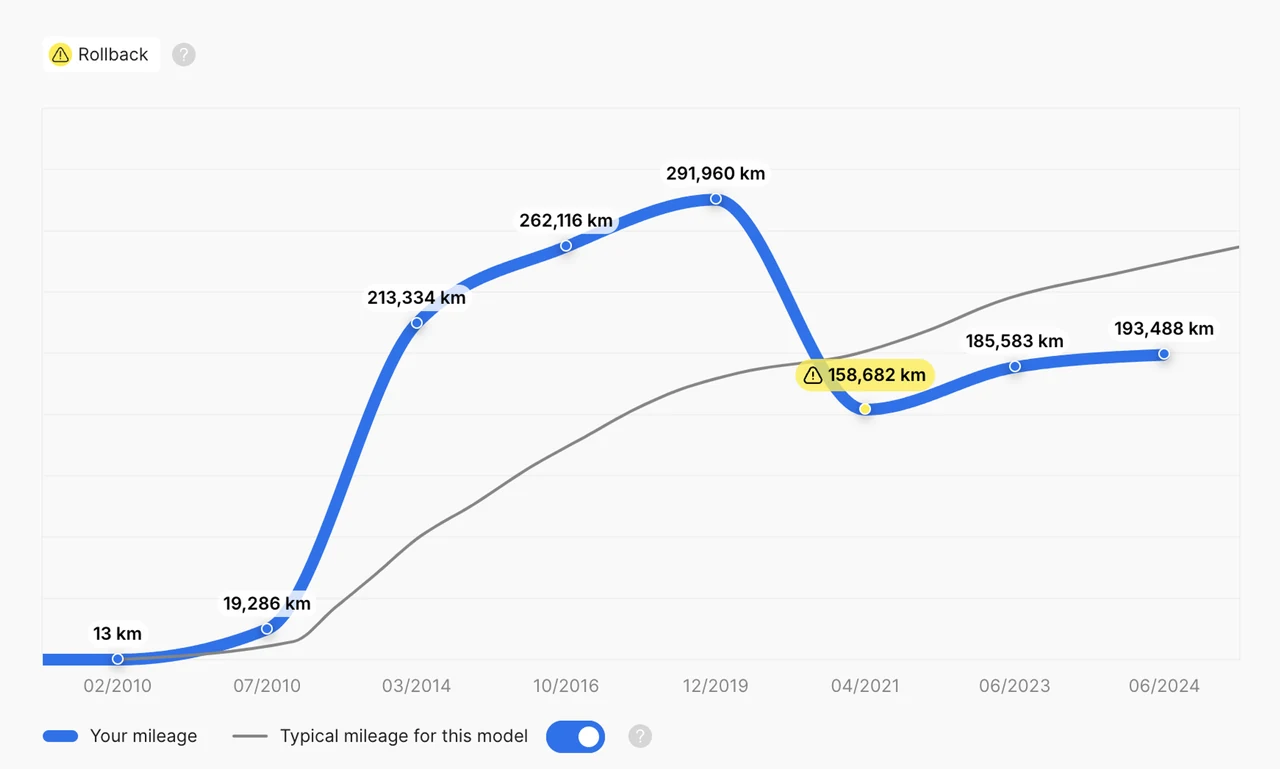
The mileage section brings together readings recorded at different times. It does not read the dashboard live: the latest entry can be older than the mileage you see during a viewing. Check the date and unit of every reading before comparing it with the odometer.
A later reading below an earlier one is a discrepancy to investigate. Gaps also matter, because the chart cannot document journeys or events for which no record was supplied. A rising line is useful evidence of the recorded sequence, but it does not authenticate every kilometre travelled.
02 / Earlier damage and assessments
Damage records: separate estimates from repair evidence
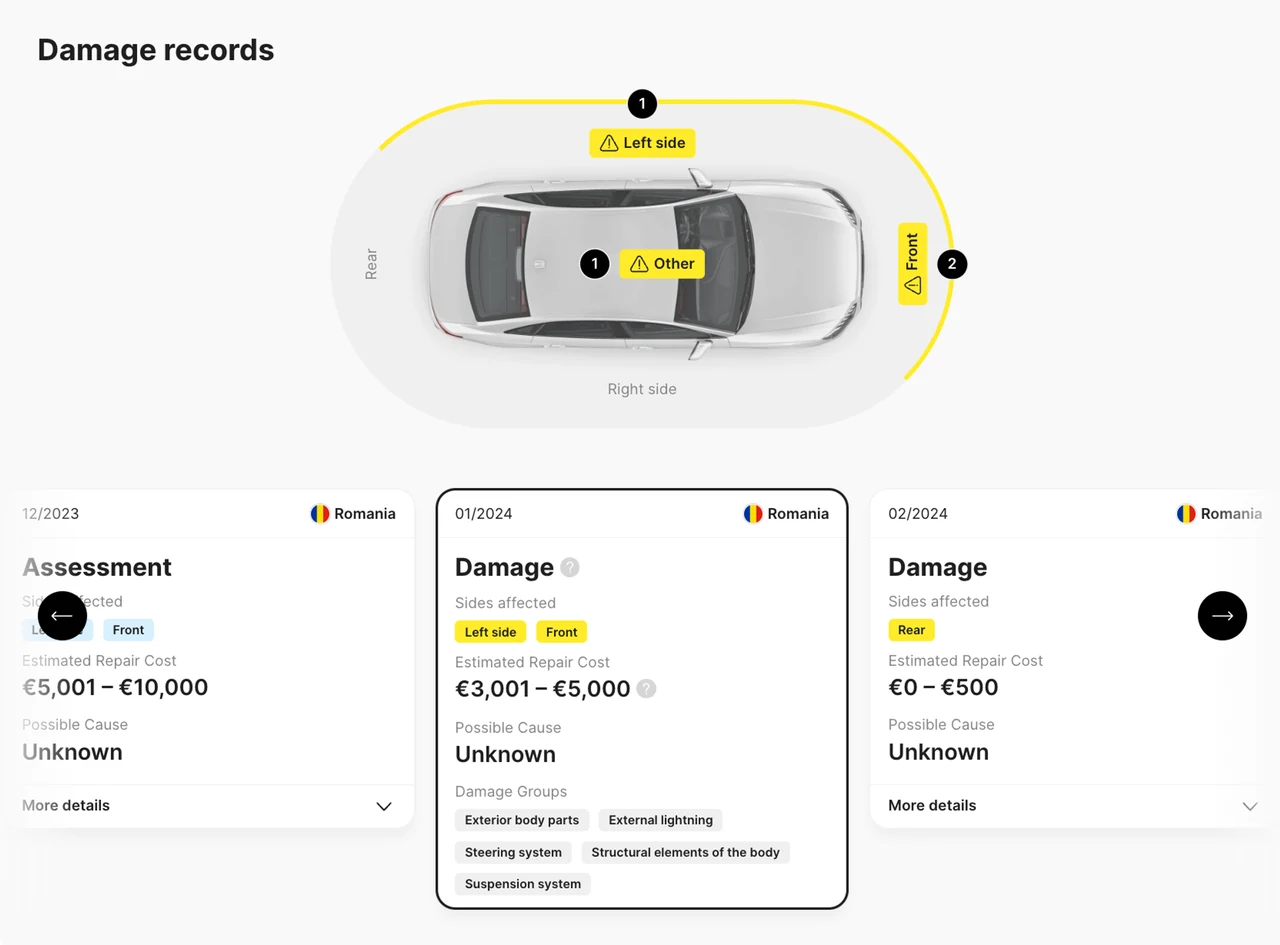
A damage entry can give you a date, location, affected areas and an estimated cost where those details are available. Read the description beside the diagram: a recorded assessment and an actual repair invoice answer different questions.
carVertical explains that valuations can reflect authorised repair-centre prices and the market where the damage was recorded. The amount can therefore differ from what an owner ultimately paid. Neither the estimate nor a diagram tells you how well a vehicle was repaired.
Source: Why damage valuations can differ.
03 / Available images
Historical photos: compare the car across time
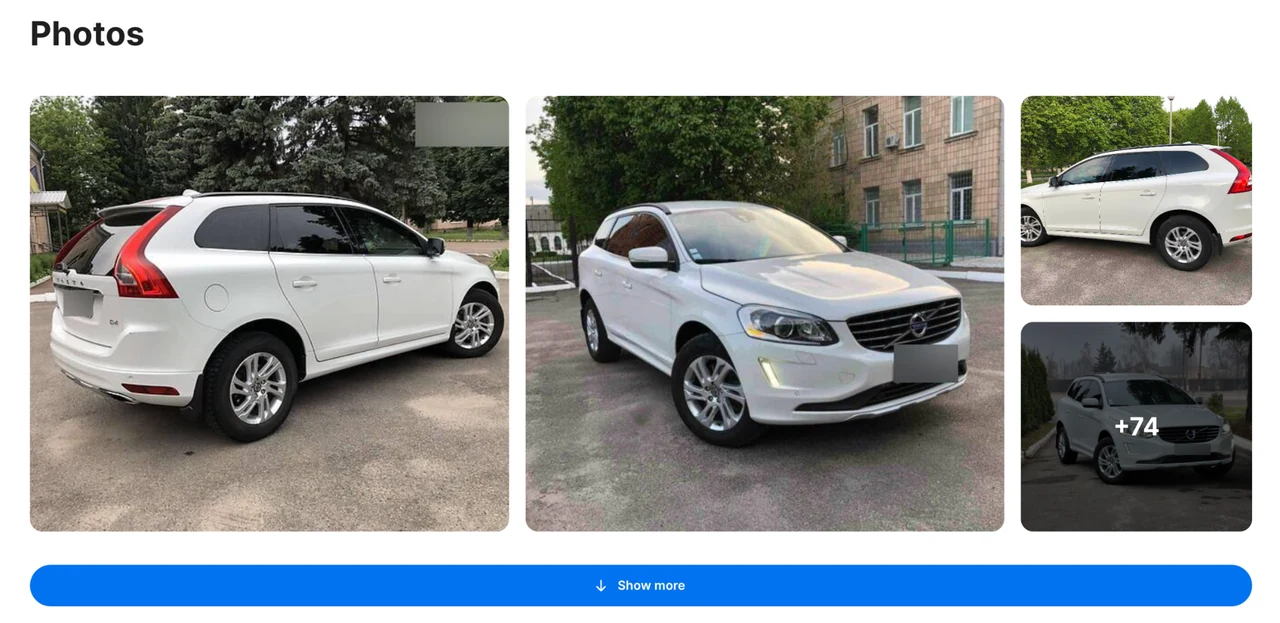
Available historical photographs can add context that a short entry does not convey. Expand the photo section and compare images from different periods rather than judging the car from the first thumbnail. Look for changes worth asking the seller about, including body panels, lights and exterior equipment.
Photos show the angles and condition captured in those images. They do not establish the condition of hidden areas or the vehicle today. An empty photo section means you still need other evidence.
04 / Dates and countries
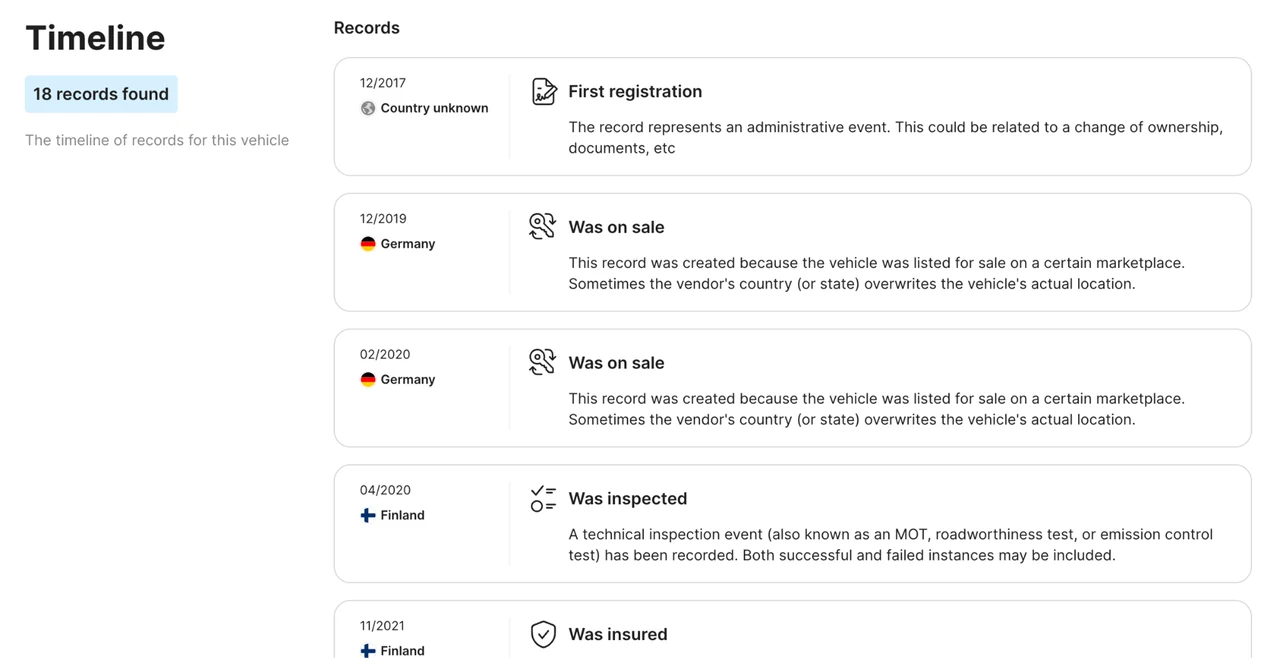
Timeline: put an imported car’s story in order
Read the chronological entries alongside the vehicle’s registration papers. They can help you connect dated events and identify periods that deserve more research. For an import, focus on what is actually documented before and after the move between countries.
Also distinguish exposure from confirmed damage. carVertical’s report-reading guide explains that a natural-disaster exposure flag can mean the car was in an affected area; that alone does not establish that the vehicle was damaged.
Other report sections and their limits
Depending on available data, a report can also include theft checks, ownership events, specifications, market-value information, safety recalls and financial or legal entries. Title branding is particularly relevant to vehicles used or registered in the US. These are different checks, so read each section’s scope instead of treating one result as an all-purpose clearance.
- Specifications: compare the listed identity and equipment with the car and documents.
- Market context: use the estimate as a starting point for research, alongside condition and comparable listings.
- Theft, title and restrictions: examine the jurisdiction and dates represented, then resolve outstanding questions with the appropriate official source.
What if the report has no historical findings?
carVertical defines a no-findings report by the absence of historical data such as mileage, damage or administrative events. Double-check the VIN before interpreting a sparse result. Missing records do not prove that the car has never been damaged.
The provider describes a process that returns a spent report to the account when its no-findings criteria are met. That is a report credit, so do not assume it means a cash payment back to your bank. Read the current policy and eligibility terms for your purchase.
Source: carVertical’s no-findings definition and credit policy.
Is carVertical worth considering for your car?
It can be useful when you need to investigate an imported car or compare dated records with a seller’s account. The decision should depend on the gaps in that particular vehicle’s paperwork and the relevant market coverage, rather than the appearance of a sample report.
- Before ordering: match the VIN on the vehicle with the documents and identify earlier registration countries.
- Before paying: confirm the total charge, currency, number of reports and current regional terms. Our displayed prices are static snapshots.
- Before buying the car: reconcile discrepancies, review repair evidence and arrange an independent inspection.
Source: Review the current provider features.
Before you choose
carVertical report questions
Does every carVertical report contain photos?
No. The provider includes historical images when they are available for the vehicle. The demonstration gallery is an example, not a promise about a specific VIN.
Can a report tell me the car’s current mileage?
It shows historical readings supplied by data sources. Compare the date of the latest entry with the dashboard and the vehicle’s documents; it is not a live odometer check.
Does a damage estimate show what the owner paid?
Not necessarily. The provider explains that the valuation can use authorised repair-centre rates in the country where damage was recorded. Ask for actual invoices and repair evidence.
Does no damage found mean the car is accident-free?
No. A result describes the records available to the service. It cannot exclude unreported events or replace a physical inspection.
Is the lower displayed price for one report?
The displayed €14.39 is the per-report figure in a three-report EN-EU affiliate bundle, with a displayed total of €43.18. The offer checked on 20 October 2026 showed one report at €22.39 and two at €31.98 total. Unit prices are rounded, so use the provider’s package total. Confirm the current market, taxes and checkout amount.
Make the report part of a complete check
Use records to prepare better questions, then check the actual vehicle.
Get the viewing checklist Compare carVertical and CARFAXLimits to keep in mind
- An empty damage section does not prove accident-free history
- No-findings report credit recovery has eligibility conditions
- Prices and bundles vary by market
Sources and further reading
- Official report features (external website)
- Report sections and official example images (external website)
- Sample report (external website)
- Understanding odometer differences (external website)
- Understanding damage estimates (external website)
- Reading photos and timelines (external website)
- No-findings report definition (external website)
Editorial source review: 19 October 2026. Availability, access rules and terms may change. No vehicle report or paid purchase is implied by this date.